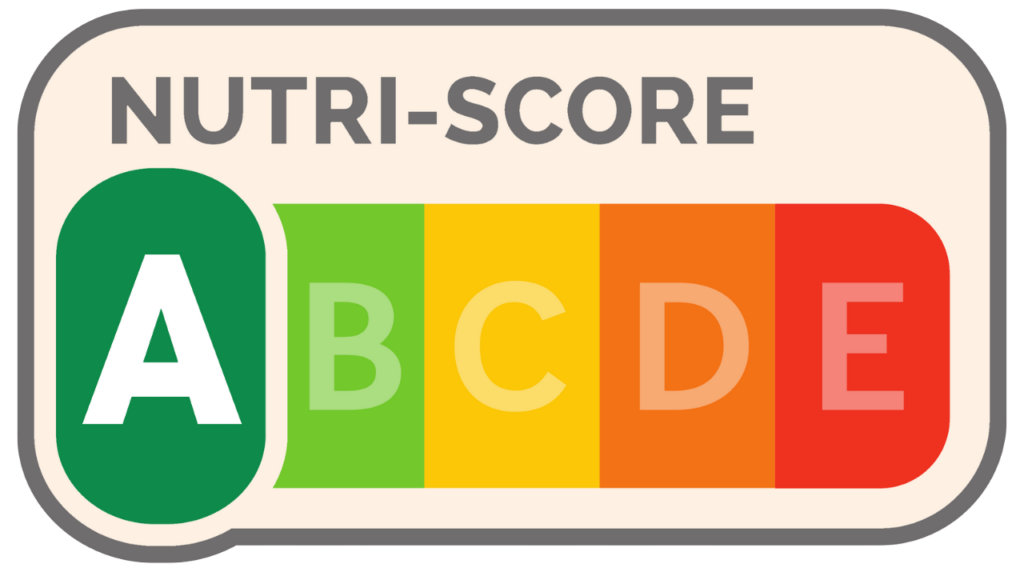
Nutri-Score is a label that shows the overall nutritional quality of packaged foods. It uses a simple system of letters and colors, from A (green) to E (red), to indicate how a product scores based on its ingredients and nutritional content. This system is designed to help consumers compare products quickly without having to read the entire nutritional contents of a food product.
How Nutri-Score works
Nutri-Score considers both positive and negative components in a product. Foods high in sugar, saturated fat, salt or calories are scored lower, while those with fiber, protein, fruits, vegetables or nuts are scored higher.
It should also be mentioned that the score is calculated based on nutrients per 100g or 100ml of the product which allows fair comparison across items.
The final score is shown as a letter from A to E, each with a color:
- A (green) – higher nutritional quality
- B (light green) – above average
- C (yellow) – moderate
- D (orange) – below average
- E (red) – lower nutritional quality
Nutri-Score does not measure health effects. It is just a label metric derived from ingredients and nutritional content. You can learn more about the scoring method on Eurofins Nutri-Score page.
Why the label only appears on some products
The Nutri-Score label is used in several European countries including France, Germany, Belgium, and the Netherlands. It is meant to help people compare similar foods quickly.
Not all products carry the label because its use is voluntary in many countries. For example, in France and Belgium, manufacturers are encouraged but not required to display the label on packaging. In Germany, adoption of it is promoted, but companies can still choose other labeling systems.
Why the score can’t be used to judge if a product is healthy
Nutri-Score is a tool for comparing products based on certain nutritional factors (as stated above), but it cannot determine whether a food is healthy. The score does not account for:
- How much of the product you eat
- Specific dietary needs, allergies or health conditions
- Full dietary patterns
- Bioactive compounds, vitamins, or minerals not included in the algorithm
Because of these limitations, Nutri-Score is best used as a quick reference for comparing similar products.
How consumers use the label
Nutri-Score works best when comparing products in the same category, like different oat milks, breakfast cereals, or snack bars.
How to check Nutri-Score Yourself
If you want to check Nutri-Score for a specific food product, you can use the free OpenFoodFacts app to scan a product. This app lets you scan a product and retrieve the estimated Nutri-Score and other metrics such as saturated fats, fats (in general), sugar and more. OpenFoodFacts is a non-profit association and dependent on volunteers and because of this, not all values are estimated correctly, and sometimes they are missing. Just keep that in mind.
Last Updated: February 17, 2026 by NutriLookup